

DOGHAUS: FROM DIGITAL TO PRINT!
Get to know Annabelle "Moowsie" Olendzki, the creator behind the popular Webtoon series DOGHAUS, and her journey bringing it to printed press.

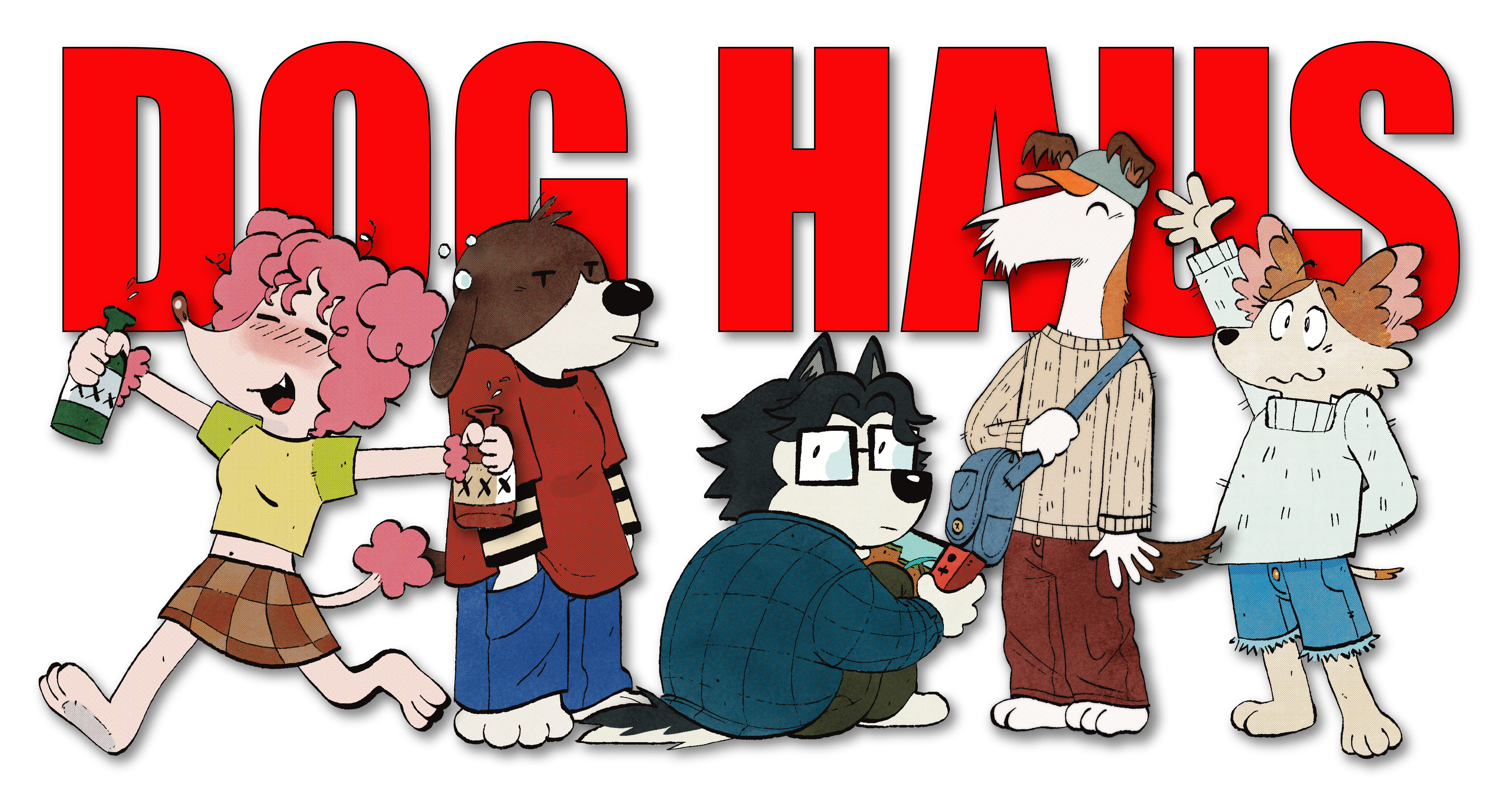
Following the college years of a group of canine friends as they navigate the highs and lows of early adulthood, Annabelle draws on her love of newspaper comics like “Zits” and her own college experience to bring her popular Webtoon series DOGHAUS to life.
Now in the process of publishing DOGHAUS as a print collection, Annabelle reflects with RAID Press on what drives her passion for this art form, her experiences as a young comic creator, and the power of community and connection as an artist.
Tell us about your love for Sunday funnies, and what about these newspaper comic strips in general had such an impact on you, not just as an artist but as a lover of comics?
When I was a kid, my dad would get the Boston Globe every day, and I would demand to read the comic section. It always felt like watching and waiting for a new episode of a tv show, since you’d have to wait for the next day to see the new issue of “For Better or For Worse,” or “Pooch Cafe.” I think I really enjoyed the ritual of waiting and seeking out the comic section to get my favourite updates every day. Then, there was the reward at the end of the week of a bigger, more colourful Sunday section.
Even though “Calvin and Hobbes” was past my time in the newspaper, I remember being as young as 6 when I started reading that comic. I think I really identified with Calvin as a kid. Yet, there was so much of Bill Watterson's comic that I didn't understand until I was older, and when I reread the series as an adult, it was like a whole new comic to me. I think I really enjoyed reading these newspaper comics with my childhood perspective, and then a whole new adult perspective when I grew up.
That’s what was always so great about newspaper comics: there genuinely was something for everyone in them. Even though my dad gets his news online now, sometimes I still make him go out and get the paper so I can see how my favourite comics are doing.
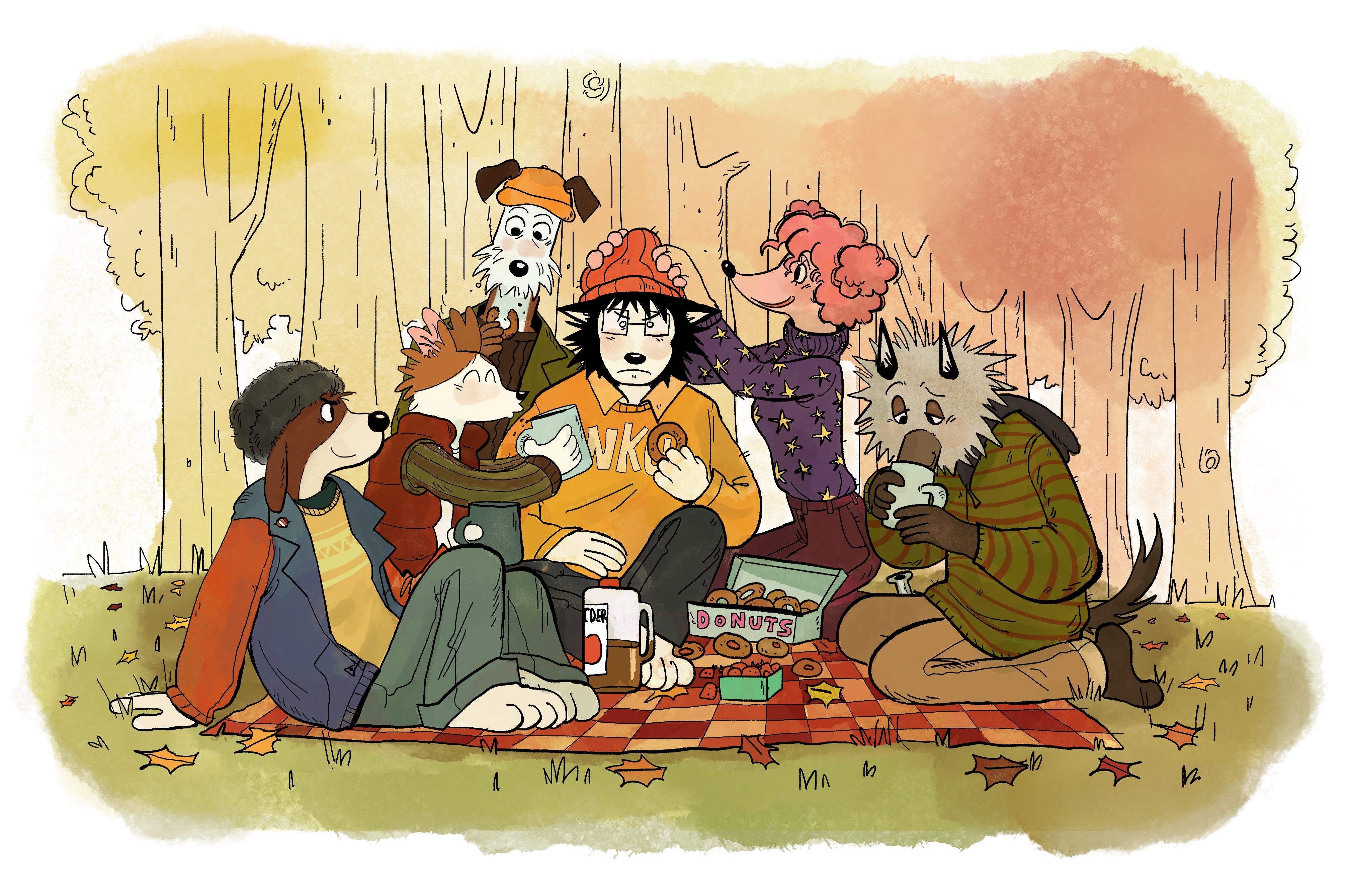
One of the favourite things about DOGHAUS is the relatability of its characters and the variety of personalities. When creating these characters, did you approach each with a preconceived idea of who they were, or did they develop naturally as the comic strips progressed?
DOGHAUS was very unplanned in the beginning. It was more of a stream-of-consciousness in the depths of my junior year of college. I was kind of all of the characters split into four pieces. Over time, as I began to take it more seriously, I started taking the time to approach the characters with more individual goals in mind for their stories. When I took the time to really develop them, there was a lot more to explore.
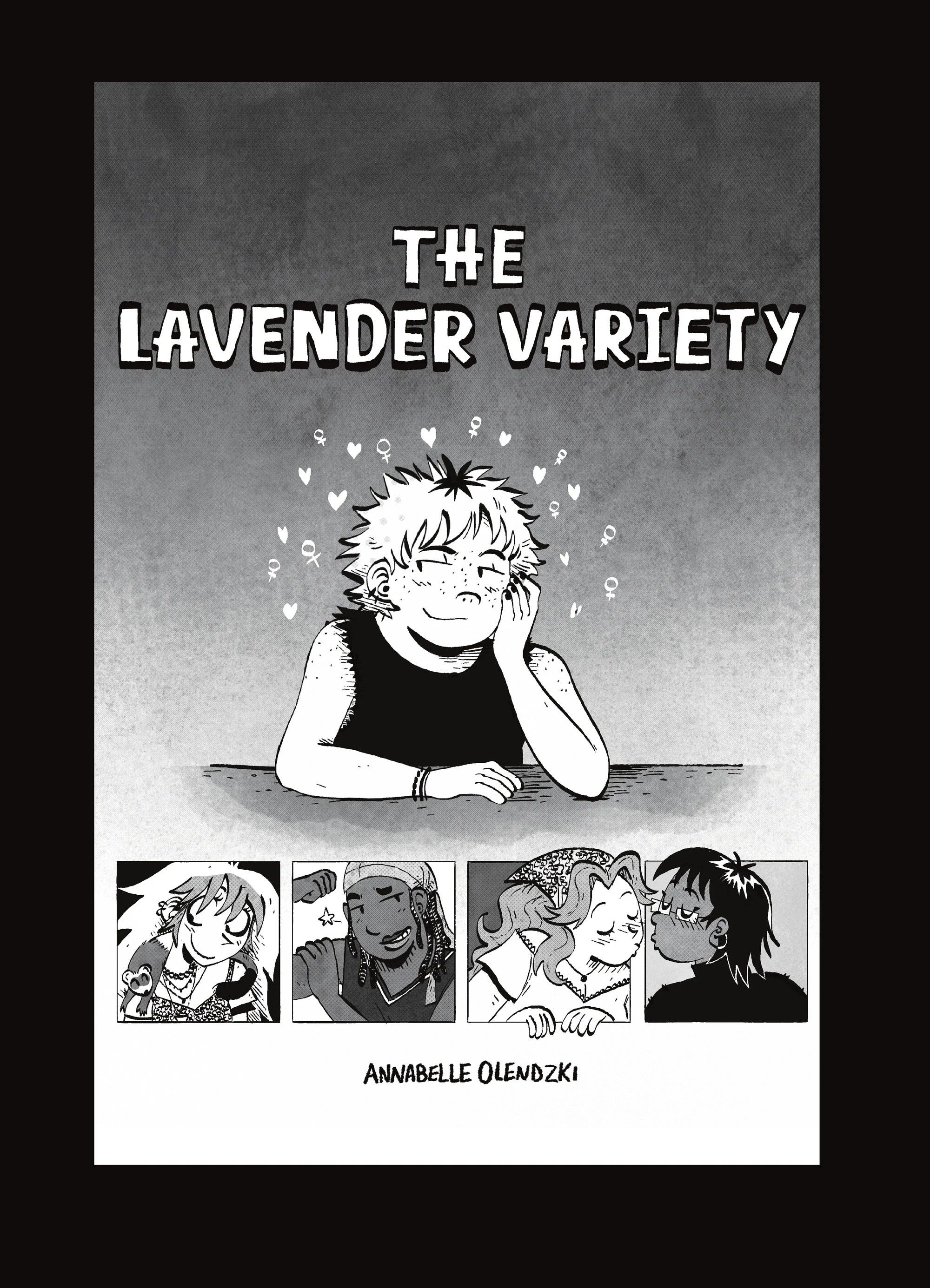
In both your Webtoon, DOGHAUS, and your more recent sapphic zine, The Lavender Variety, there is a strong focus not just on friendship but also on connecting through community. As a creator, how has your community impacted your work, and do you have any hopes for how your work impacts your community?
The people around me have influenced my work in a very sincere way. In the ways they joke, in the ways we are there for each other, in the way we transfer knowledge, I could honestly go on and on! Human connection is fascinating to me, especially the power of conversation, which is how many early DOGHAUS issues started. Just with a conversation I've had with friends, how conversations change, connect, and spark.
It became a more central theme in later DOGHAUS issues, as well as in The Lavender Variety, as I’ve come to understand the importance of not only communication and conversation but also of a community. I often receive messages about how my work resonates with someone and comforts them, especially in times when they feel isolated. Relatability has connected friends by allowing them to identify with the characters and situations. I think people want to be seen and heard, and I believe DOGHAUS continues to answer those sentiments. I hope I can keep doing that.
Working on both sides of the comic-creating sphere now, being digitally published and soon to be print published, how would you compare the processes of the two? Was there anything about your creative process that changed moving from one medium to the other?
Despite the community and connection I just talked about, the process of making DOGHAUS is a very solitary act. It’s just me drawing, writing, and uploading. It can get a bit lonely for someone who loves connecting with people. I’ve really enjoyed bringing the work I've done solo now to collaborate with publishers. Being able to learn more about the process of publishing has taught me a lot and brings me conviction towards the upcoming book.
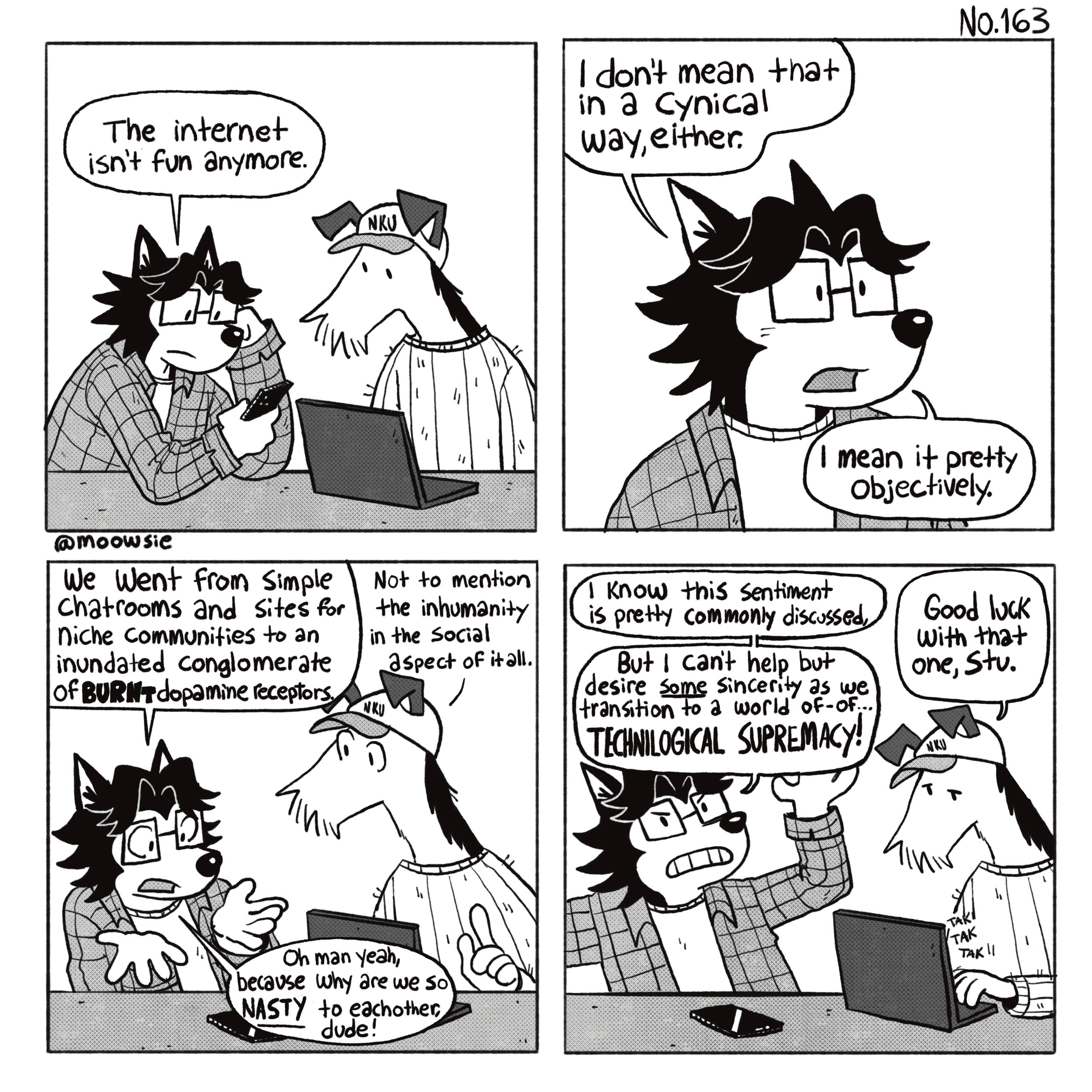
With the experiences you’ve had as a comic creator so far, do you have any advice for new artists or art school students who want to start sharing their own projects outside of social media but aren’t sure where to start?
It’s hard to know where to start when you want to take your work to the next level. That’s where I think the power of conversation and connection is your best asset. Going out to expos, shows, and conventions and meeting people is not this “lost art” people seem to feel nowadays, or a stigma that comic artists are bad at it. Being able to put yourself out there is scary, but essential! Your work will speak for itself, and you will find the right audience and collaborators. If you’re in college, you have excellent resources at your fingertips, such as professors, workshops, career services, etc., exhaust them all! Don’t be afraid to advocate for yourself, either.
Stay up to date on the DOGHAUS collection by subscribing to our HOT off the Press newsletter, or by signing up to the DOGHAUS Kickstarter Landing Page, or both!
Follow Annabelle on Instagram and check out DOGHAUS on Webtoon.